 By admin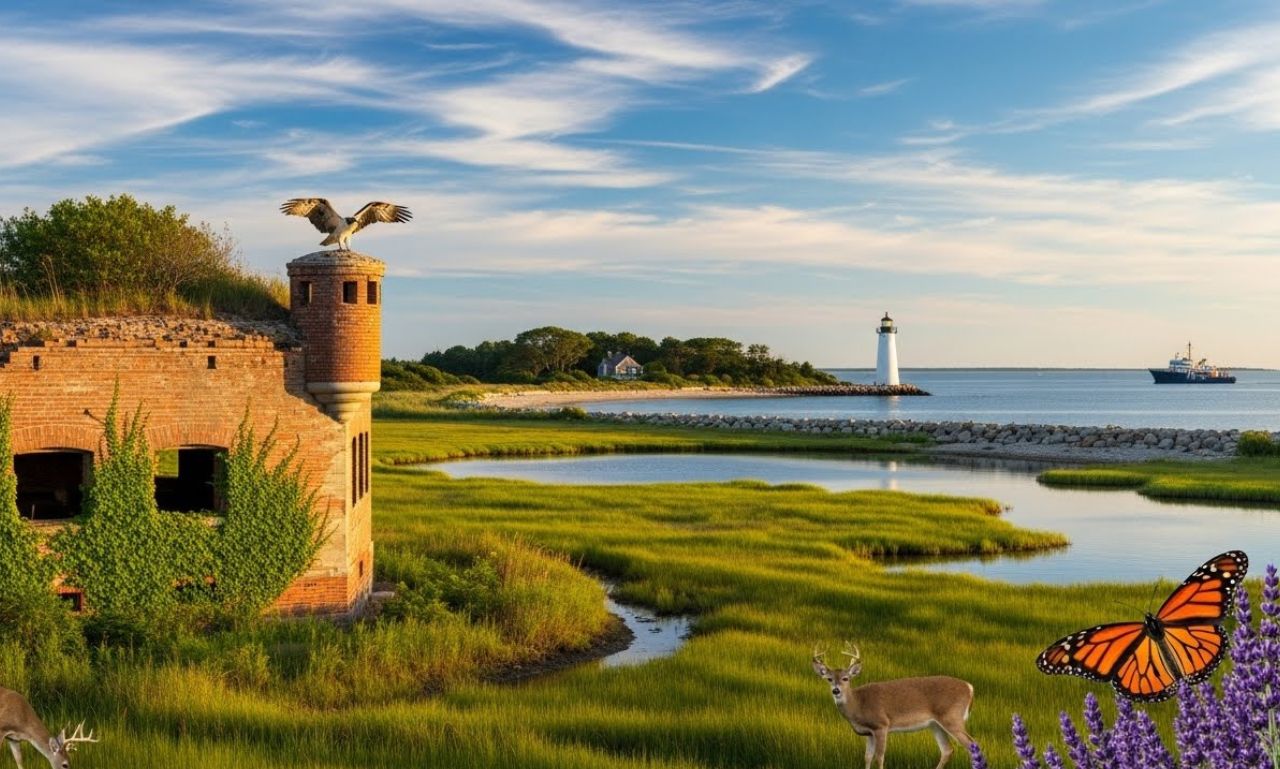
Plum Island Southold NY 11957 is one of New York’s most intriguing and mysterious places. Just offshore from the North Fork of Long Island, this 840‑acre island combines history, science, ecology, and mystery in a way few locations can match. Although the public cannot visit its shores, Plum Island Southold NY 11957 has captured imaginations for generations because of its past as a military fort, its long‑standing scientific role, and its thriving natural environment.
Where is Plum Island Southold NY 11957?
Plum Island Southold NY 11957 sits about one and a half miles off Orient Point at the eastern edge of Long Island Sound. The island is part of the town of Southold in Suffolk County and lies within the ZIP code 11957. From a distance, you can see its shoreline, old buildings, and lighthouse peeking above the water’s edge, but that’s about as close as most people get.
The waters around the island are part of a channel known as Plum Gut, a deep, strong tidal opening between Orient Point and Plum Island. This area is significant for marine life and provides a rich habitat for fish and other species.
A Long History Plum Island Southold NY 11957
Early Native and Colonial Era
Before Europeans arrived, Native American tribes — particularly the Montaukett — likely used Plum Island as a seasonal fishing and hunting ground. After English settlers arrived in the 1600s, the land changed hands several times, and early residents began to use the island’s resources for grazing and navigation support. It was eventually named for the beach plums that grew abundantly along its dunes.
Strategic Military Use
Plum Island Southold NY 11957 played a role in U.S. coastal defense beginning in the late 19th century. Fort Terry was constructed starting in 1897 as part of the coastal defense system protecting Long Island Sound and the entrance to New York Harbor. It remained important through World War II, with soldiers stationed there to guard the sound.
Today, remnants of Fort Terry’s brick buildings and guard structures still stand, giving the island a somewhat abandoned and historical feel. While visitors can’t set foot on the island, these old fortifications are a visual reminder of the island’s military past.
The Animal Disease Center and Restricted Access
The most well‑known chapter in the story of Plum Island Southold NY 11957 began in 1954, when the federal government established the Plum Island Animal Disease Center (PIADC). This high‑security research facility was created to study animal diseases — particularly those like foot‑and‑mouth disease and African swine fever — that could devastate livestock and agriculture if they spread unchecked.
PIADC operated under strict safety protocols and required federal security measures, which is the main reason the public cannot freely access Plum Island. Scientists and authorized personnel were allowed to travel to and from the facility, but everyday visitors were strictly barred for safety and security reasons.
In recent years, the government began relocating research operations to a new facility in Kansas, and discussion around the island’s future — including conservation and possible public access — has grown.
Wildlife and Untouched Nature Plum Island Southold NY 11957
The restricted nature of Plum Island Southold N-Y 11957 has been a mixed blessing for wildlife. With limited human disturbance for decades, the island’s ecosystems have remained largely intact, making it a haven for a variety of plant and animal life.
Rich Bird Life
Bird watchers and scientists recognize Plum Island as an important stop for migratory birds. More than 200 species — from shorebirds to raptors — use the island and its surrounding waters as resting, nesting, or feeding grounds. Rare species such as roseate terns and piping plovers find habitat here, and many environmental organizations advocate protecting these areas permanently.
Seal and Marine Life
In winter, large groups of harbor seals often gather on the rocky shores and beaches near the island. These marine mammals are a highlight of local boat tours that circle Plum Island, giving visitors a rare glimpse of wildlife without stepping onto the island itself.
Forests, grasslands, coastal dunes, and salt marshes cover much of Plum Island. This natural diversity is rare in such an accessible region, making the island a kind of accidental refuge where ecosystems thrive with little human interference.
Iconic Landmarks Plum Island Southold NY 11957
Despite the restricted access, two standout features of Plum Island Southold N-Y 11957 are visible from afar:
Plum Island Lighthouse
The Plum Island Lighthouse, built in 1869, remains one of the island’s most recognizable structures. Although no longer operational, the historic lighthouse served for decades as a guide for ships navigating the often choppy waters of Long Island Sound. It was added to the National Register of Historic Places due to its historical significance.
Fort Terry Remnants
The brick structures from Fort Terry are scattered across the island and visible from boats or high‑powered binoculars on the mainland. These once‑active military buildings now stand silent, a testament to the island’s strategic past.
Myths, Rumors, and Public Curiosity Plum Island Southold NY 11957
Because Plum Island Southold N-Y 11957 has been out of bounds for much of its modern history, public curiosity has grown into a lore filled with stories, speculation, and even wild theories. Some local legends and popular culture works have suggested secret experiments, mysterious creatures, or hidden government agendas tied to the island’s restricted research activities.
While these stories capture the imagination, factual information makes it clear that most such rumors are not supported by evidence. The island’s role as a federal research facility and its ecological isolation are sufficient reasons for security and restricted access without needing more sensational explanations. Celexo
The Future of Plum Island Southold NY 11957
Debate about what comes next for Plum Island continues. Some conservation groups and local advocates are pushing for permanent protection of the island as a wildlife refuge or historical site, ensuring public access could be possible in the future. Supporters argue that a responsible conservation plan could benefit both the environment and the local economy by drawing visitors interested in nature, history, and culture.
Meanwhile, others emphasize the need to preserve the island’s fragile ecosystems and protect its natural beauty long term. Whatever the outcome, Plum Island Southold NY 11957 remains a unique piece of New York’s landscape with a story that is still unfolding.
Conclusion
Plum Island Southold NY 11957 stands as a rare blend of history, science, and natural beauty. From its early days with Native Americans and colonial settlers to its strategic military role and decades as a high‑security research hub, the island has played many roles. Today, as conservation questions and discussions about its future grow, the island continues to captivate with its mix of mystery and ecological significance.